The Real Life That Lives Inside My Performances: Stories I've Never Fully Told
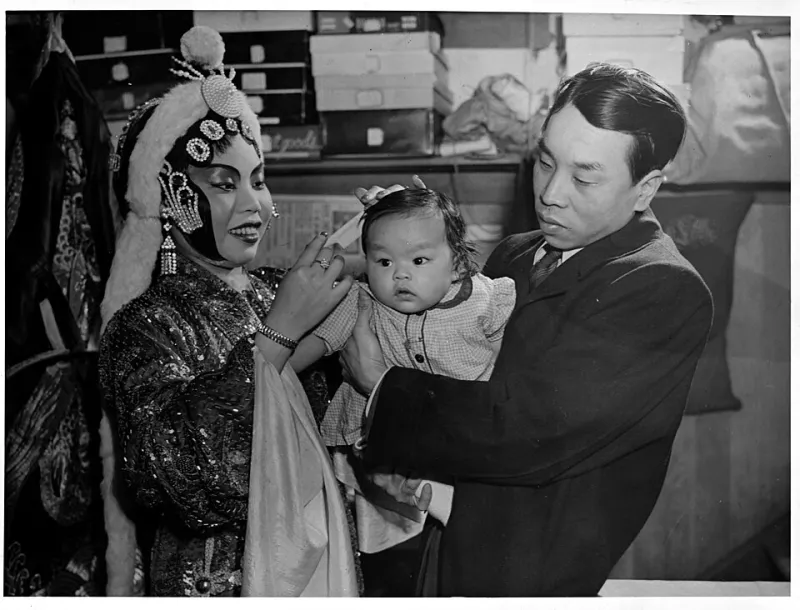
Photo: Vancouver Public Library Historical Photographs, No restrictions, via Wikimedia Commons
Every show I've ever done has a secret life — a real moment, a real person, a real heartbreak or revelation hiding just beneath the surface. People see the finished product: the lights, the costumes, the polished movement. What they don't see is the late-night drive where an idea was born, or the argument I had with someone I loved that accidentally became the emotional spine of an entire piece.
I've wanted to pull back the curtain on this for a while. Not to overshare or make things weird, but because I genuinely believe that when you understand where art comes from, it hits differently. So here's the real story behind some of the performances that have meant the most to me.
The Piece That Started With a Grocery Store
This one still makes me laugh a little, because it sounds so ordinary. But one afternoon I was standing in the cereal aisle of a Kroger in Nashville, and I watched an elderly man spend what had to be four full minutes just staring at two boxes of oatmeal. He wasn't confused, exactly. He just looked... like he was in no hurry to make a decision. Like the decision itself didn't quite matter anymore.
I couldn't stop thinking about him on the drive home. What was his story? Was he lonely? Was he content? Was there a difference?
That image became the seed of a solo piece I developed about stillness — specifically, the kind of stillness that isn't peace but isn't despair either. That in-between place a lot of us occupy and rarely talk about. The man in the cereal aisle probably has no idea he accidentally handed me one of the most meaningful artistic starting points I've ever had.
Art really does come from everywhere, y'all.
When a Friendship Ending Became a Full Narrative Arc
A few years back, I went through the end of a close friendship. Not a dramatic falling out — no big fight, no clear villain. Just a slow drift that neither of us seemed able or willing to stop. Those are, in some ways, harder to process than the explosive endings. There's no resolution, no catharsis. Just a gradual absence where someone used to be.
I channeled a lot of that into a collaborative piece I worked on with a small ensemble. I never told my collaborators the specific source material — I just brought in the emotional architecture: the way two people can be in the same room and already be strangers, the specific loneliness of grieving something that technically hasn't ended yet.
Audiences responded to that show more intensely than almost anything I'd done before. People came up afterward talking about marriages, estranged siblings, friendships of their own. None of them knew they were watching me process a specific loss. That's the magic of keeping the source personal but the expression universal.
My Grandmother's Hands
I need to talk about my grandmother for a second, because her influence shows up in my work more than anyone probably realizes.
She was a woman who expressed love entirely through action — cooking, fixing things, showing up. She wasn't a big talker. She didn't say "I love you" constantly, but she'd drive two hours in a snowstorm to bring you soup. Her hands were always doing something. Always in motion.
When she passed, I didn't know how to grieve in a way that made sense to me. So I made something. I developed a short piece that was almost entirely hands-focused — the way they move when someone is nervous, when they're nurturing, when they're letting go. It was my way of honoring her specific kind of love, the kind that lives in doing rather than saying.
I've performed variations of that piece several times over the years, and every single time, it's the most personal thing I do on any stage. Most audiences don't know the origin. But I do, and she does — wherever she is.
The Observation That Became an Obsession
I spend a lot of time in coffee shops. I know, very cliché entertainer behavior, but here we are. And I am an unabashed people-watcher. I'm not proud of how long I can sit and observe strangers having conversations, but I've made my peace with it.
One afternoon I noticed a couple — probably mid-thirties, clearly together for a while — sitting across from each other without speaking. Not in a tense way. Just comfortable. But every few minutes, one of them would do something small — push a coffee cup slightly toward the other, adjust a napkin, glance up and then quickly back down. These tiny, almost invisible acts of attention.
I became kind of obsessed with those micro-gestures. The way people communicate care in the smallest possible increments. I ended up building a whole section of a later show around that idea — the language of small gestures, and what they say when words feel too big or too clumsy.
Sometimes the most powerful material is hiding in the most mundane moments. You just have to be paying attention.
Why I Keep Reaching Back Into Real Life
I could write fictional emotional arcs. I could construct characters and situations from scratch and probably do fine. But there's something about tethering performance to lived experience — mine or someone else's — that gives it a different kind of weight.
When I know the root of something is real, it keeps me honest on stage. It's harder to phone it in when the material actually matters to you. And I think audiences feel that tether, even when they can't see it.
The performances I'm most proud of aren't necessarily the most technically impressive ones. They're the ones where real life leaked through — where something I was carrying got transformed into something that other people could hold for a moment too.
That's the whole deal, as far as I'm concerned. That's the story beneath every story.
