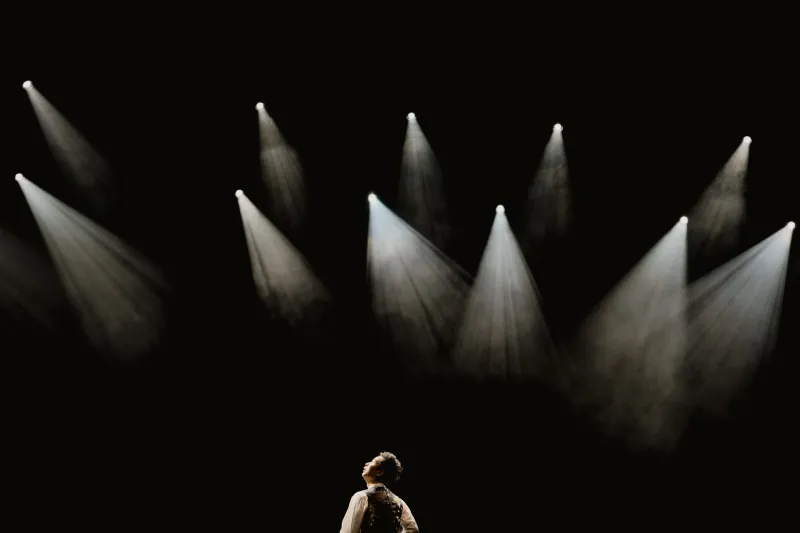
Are You Performing for the Room or for the People in It?
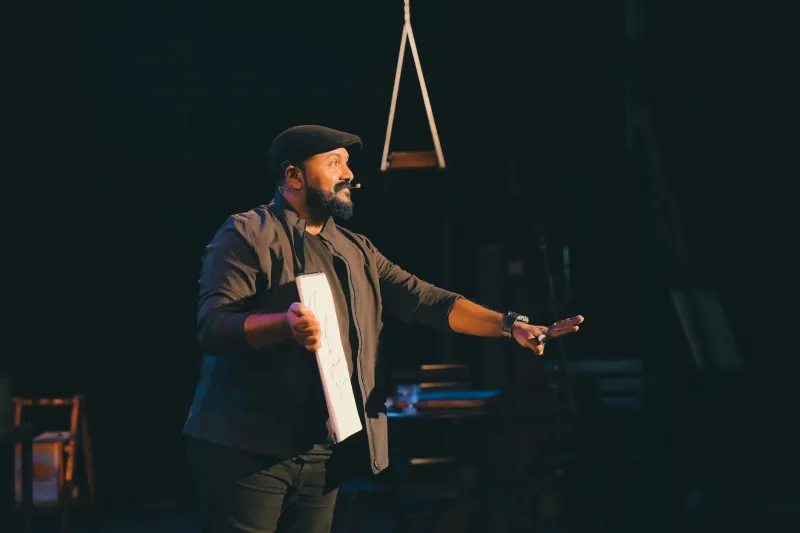
The Night I Realized I Was Performing for the Wrong Reason
I remember a show — it was a smaller venue, maybe two hundred seats, somewhere in the middle of a run that should have felt exciting. I walked offstage and the first thing I did was scan the faces of the people around me. Not to connect. Not to process what we'd all just shared. I was looking for confirmation. I needed someone to tell me it was good.
That's the moment I knew something was off.
It wasn't that the performance was bad. By most measures, it was solid. But I had spent the entire time on that stage thinking about how I was landing rather than where I was landing. There's a difference — a massive one — and it took me longer than I'd like to admit to fully understand it.
What Validation-Seeking Actually Looks Like in Practice
Here's the tricky part: performing for validation doesn't always look like insecurity. Sometimes it looks like ambition. Sometimes it looks like professionalism. You're hitting every mark, you're technically on point, you're doing everything right — and yet there's this invisible leash attached to the audience's reaction, and you're tugging on it the whole time.
When you're performing for validation, the audience becomes a mirror rather than a room full of living, breathing human beings. You're not really with them. You're watching yourself through their eyes, constantly adjusting, constantly measuring. Did that land? Was that too much? Are they impressed? Are they moved? Are they going to remember me?
The psychological weight of that is exhausting. And the cruel irony is that the more you chase that external approval, the harder it becomes to actually earn it. Audiences — even ones who couldn't articulate why — feel the difference between someone performing at them and someone performing with them.
Connection Is a Completely Different Animal
Performing for connection starts from a totally different place. Instead of asking how am I doing, you're asking what are we doing together right now. The orientation shifts from inward to outward. From self-monitoring to genuine presence.
When I'm in that state — and honestly, it doesn't happen every night, I won't pretend it does — I'm not thinking about whether the moment is working. I'm inside the moment. I'm aware of the energy in the room the same way you're aware of weather. It's not analytical. It's almost physical.
And here's what's interesting: audiences respond to that completely differently. Not because they can see the internal shift, but because connection is contagious. When a performer is genuinely present and genuinely reaching, something opens up in the room. People lean in. They go quiet in a different way. The laughs are fuller. The silence is heavier. You stop being someone they're watching and start being someone they're with.
That's the whole point of live performance, right? That thing that can't happen through a screen. The shared moment that only exists because everyone in that room showed up at the same time.
The Practical Shift: How You Actually Change the Habit
So how do you move from one mode to the other? I'm not going to pretend there's a clean five-step answer, because there isn't. But a few things have genuinely helped me.
Get curious about the audience before you get in front of them. Not in a manipulative way — in a human way. Who are these people? What did they do today before they walked through those doors? What do they need tonight? Even just asking those questions loosens the grip of self-focus.
Notice when you're performing for the imaginary critic. There's this phantom in a lot of performers' heads — some composite of every tough review, every skeptical producer, every parent who wasn't sure this was a good career choice. When I catch myself playing to that person, I try to let them go. They're not in the room. The actual people are.
Give yourself permission to have a bad night without it meaning something about your worth. This is the big one. Validation-seeking often comes from a belief that your value as a person is tied to how the performance goes. When you start separating those two things — when a rough show is just a rough show and not evidence of your fundamental inadequacy — the desperation starts to ease up.
Find one person in the room and actually play to them. Not in a weird, staring-someone-down way. But pick up on someone who's engaged, or someone who looks like they need to be reached, and let them be your anchor. It pulls you out of your own head and into actual human exchange.
Why This Matters Beyond the Stage
I think about this stuff a lot beyond just performance, honestly. Because the same dynamic plays out in interviews, in social media, in every public-facing thing an entertainer does. You can feel when someone's Instagram is a performance for approval versus an actual window into their life. You can feel when a celebrity interview is someone managing their image versus someone actually talking to you.
And audiences — fans — are way smarter about this than we sometimes give them credit for. They've grown up in a media landscape saturated with carefully managed personas. They can smell the difference between someone performing their authenticity and someone actually being real.
The entertainers who build lasting, genuine connections with their audiences aren't necessarily the most technically gifted or the most conventionally successful. They're the ones who figured out how to actually show up. Who decided at some point that being seen — really seen, imperfections and uncertainty included — was worth more than being impressive.
The Harder Question
If you're reading this and you're in the performing arts in any capacity, here's the question I'd sit with: What are you actually after when you get on stage?
Not what you tell yourself. Not the answer that sounds right. The real one.
Because if it's love — and for a lot of us, it starts there — that's not something to be ashamed of. Most of us came to this work carrying some version of that need. The question is whether you're willing to do the internal work to transform that need into something that actually serves the people in front of you.
The shift from performing for validation to performing for connection isn't a one-time revelation. It's a practice. Some nights you nail it. Some nights you spend the whole show watching yourself in the audience's eyes. But the fact that you're asking the question at all? That's already the beginning of something different.