The Roles Nobody Wrote for You Are Often the Ones That Define You

The Call You Never Expected
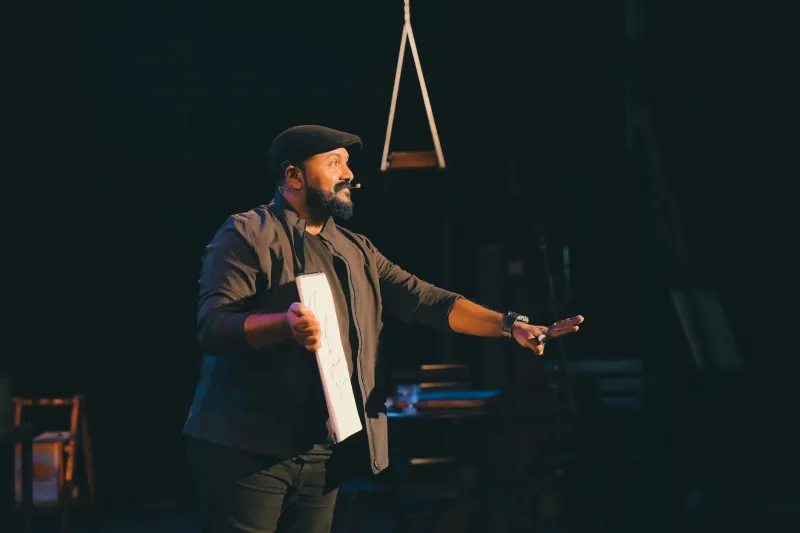
It was a Tuesday. I remember because I had laundry going and a half-eaten bowl of cereal on the counter. My phone rang with a number I almost didn't pick up, and forty-eight hours later I was standing in the wings of a theater I'd never rehearsed in, about to step into a role I hadn't auditioned for.
That night didn't go perfectly. But it went honestly — and honestly turned out to be exactly what the audience needed.
That's the thing nobody really tells you when you're starting out: the career you meticulously blueprint for yourself and the career that actually unfolds are almost never the same document. The gap between those two versions of your professional life? That's where the most interesting stuff happens.
Rigid Plans vs. Strategic Flexibility
There's a version of career ambition that looks really good on paper. You pick your lane, you stay in it, you build a brand around one specific version of yourself, and you say no to anything that doesn't fit the aesthetic. I get it. It feels safe. It feels professional.
But here's what I've watched happen to people who go that route: they become experts at one very specific thing right up until the moment the industry stops needing exactly that thing. And then they're stuck.
Strategic flexibility isn't the same as saying yes to every random opportunity that floats your way. It's more like keeping your roots deep while letting your branches move. You know who you are at your core — your values, your voice, your genuine artistic identity — but you don't get precious about which form that takes on any given day.
Some of the most versatile performers working today built that versatility by accident. They filled in. They covered. They took the weird indie project between the bigger gigs. And somewhere in all that saying yes to the unfamiliar, they discovered range they didn't even know they had.
What "Being Ready" Actually Means
I've heard people talk about being ready like it's this static destination you arrive at. Like one day you'll have done enough preparation that you can finally relax and wait for the right thing to come along.
That's not how it works — at least not in my experience.
Being ready is a practice, not a destination. It means staying technically sharp even when you're not actively in production. It means keeping your instrument — whether that's your voice, your body, your comedic timing, your emotional availability — in working order between the big moments. It means staying curious about genres and formats that aren't your primary lane, because you genuinely never know when one of those will become relevant.
I've known performers who were handed a last-minute opportunity of a lifetime and couldn't take it because they'd let certain skills get rusty. Not because they weren't talented. Because they'd been waiting instead of preparing.
The understudy who steps in and owns it on opening night isn't lucky. They're ready. There's a huge difference.
The Pivot That Changes Everything
Let me tell you what actually happens when you take a role outside your perceived brand.
First, your existing audience is surprised. Some of them are skeptical. You might lose a few followers. That part is uncomfortable, and I won't pretend it isn't.
But then something else happens: you attract people who never would have found you otherwise. Audiences who needed to see this version of what you can do. And often — not always, but often — those new fans become some of your most loyal ones, because they found you at a moment when you were being genuinely, uncomplicatedly yourself rather than performing a version of yourself you thought the world expected.
I switched genres once in a way that confused pretty much everyone in my circle. My manager was nervous. My friends were asking questions I didn't fully have answers to. The project itself was smaller than what I'd been doing — less visibility, less money, a format I'd never worked in before.
It became one of the most referenced things I've ever done. People still bring it up. Not because it was the flashiest thing on my resume, but because something about it was real in a way that landed differently.
That's what happens when you stop auditioning for your own life and just show up for the actual work.
Saying Yes to the Unfamiliar
I want to be careful here, because I'm not advocating for recklessness. There's a difference between strategic flexibility and just bouncing around without intention.
When I talk about saying yes to the unfamiliar, I mean this: when an opportunity arrives that scares you a little, that doesn't fit neatly into the story you've been telling about yourself, that requires you to learn something new or be seen in a new way — don't dismiss it automatically just because it doesn't match the plan.
Sit with it. Ask yourself whether the discomfort is coming from genuine misalignment or just fear of the unknown. Those are two very different things, and learning to tell them apart is one of the most useful skills you can develop as a performer.
Sometimes the answer will still be no. But sometimes you'll realize the only reason you're hesitating is because you've gotten attached to a version of yourself that the world actually needs you to outgrow.
The Story the Audience Remembers
Here's what I keep coming back to: audiences are remarkably good at sensing authenticity. They can feel when you're performing within your comfort zone versus when you're actually in it — fully present, slightly terrified, genuinely invested in something that isn't guaranteed.
The performances that live longest in people's memories are rarely the most polished ones. They're the ones where something real was at stake. Where the performer was doing something they hadn't fully mastered yet, and you could feel the aliveness of that in every moment.
That's what unexpected opportunities give you, if you let them. Not just a new credit on your resume, but a new kind of aliveness on stage and on screen.
The roles nobody wrote for you, the gigs that came out of nowhere, the pivots that made your publicist nervous — those aren't detours from the story of your career. For a lot of us, they are the story.
Stay ready. Stay curious. Pick up the call on a Tuesday.