Stop Trying to Be Entertaining — Start Trying to Be There
Somewhere along the way, I got really good at making people feel good without actually being present with them.
I'd walk into a meet-and-greet and the whole machine would kick on. The smile that hits before the thought does. The quip that lands just right. The way I'd lean in slightly when someone told me something personal, like I was listening — and I was, technically — but part of my brain was already scanning the room, tracking the line, calculating the energy I had left for the next forty people waiting. I wasn't fully there. I was performing being there.
And for a long time, I told myself that was the job.
The Costume We Wear Even When We're Off Stage
Here's something nobody really talks about in this industry: entertainers are often the worst people in the room at actual human connection, precisely because we've gotten so skilled at simulating it.
We know how to read a crowd. We know how to mirror energy, pace a story, time a laugh. Those are real skills. But they can also become a kind of armor — a way of staying perpetually in performance mode so that nothing genuinely lands, nothing genuinely costs us anything.
I think about those early days when I was just starting out, before I'd built up the reflex. I'd meet someone after a show and I'd be awkward, a little too earnest, not sure where to put my hands. And those conversations? People still bring them up. Not because I was charming. Because I was there.
The polish came later. And so did the distance.
What a Meet-and-Greet Actually Asks of You
I've done hundreds of meet-and-greets over the years. Some of them I remember vividly. Most of them I don't — not because the people weren't wonderful, but because I was in execution mode the whole time. Move through, make them feel seen, next.
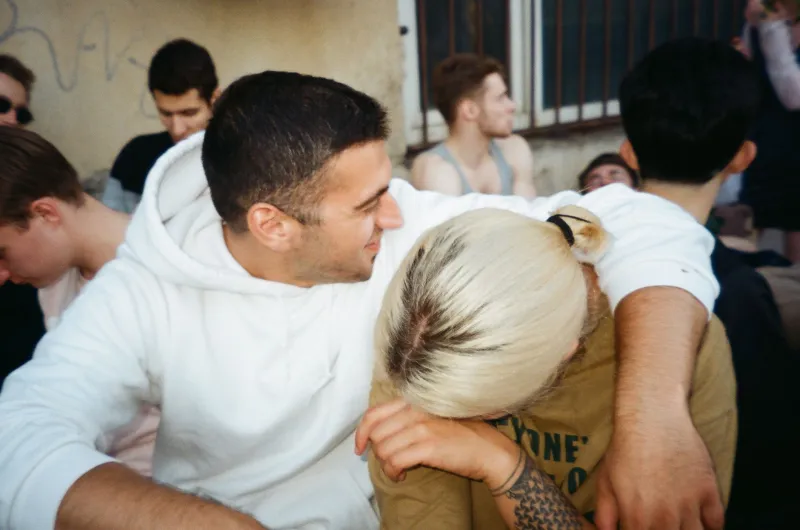
But there are a handful that stopped me cold. A woman in Cincinnati who told me she'd been going through a divorce and one of my shows was the first time she'd laughed in months. Not a quick share — she was trembling a little when she said it. And instead of giving her the warm, practiced response I had ready for moments like that, I just... stopped. Didn't fill the silence immediately. Let it sit. Said something honest and small and imperfect.
She hugged me for a long time. And I let her.
That's not something you can choreograph. The moment I stopped trying to manage it was the moment it became real.
Social Media and the Illusion of Closeness
This gets trickier when you move it online. Social media has handed entertainers this incredible tool for seeming accessible — the casual Instagram story, the Twitter reply that makes a fan feel like you actually saw them, the TikTok that's "behind the scenes" but is still very much a produced thing.
I'm not throwing stones. I do all of it. But I've had to get honest with myself about the difference between content that creates a feeling of closeness and moments that are actually close.
The posts that have meant the most to people — the ones that generate responses that genuinely move me — are almost never the ones I crafted carefully. They're the ones I typed when I was tired or grateful or a little raw. The ones where I wasn't thinking about the caption, I was just thinking about the thing I wanted to say.
You can feel the difference when you're on the receiving end of it. We all can. The curated warmth versus the real thing. And audiences — fans especially — are so much sharper about that distinction than most entertainers give them credit for.
Presence Is a Practice, Not a Personality Trait
I used to think being present was something you either were or you weren't. Some people are just naturally warm and grounded, and the rest of us are running on adrenaline and habit. But I've come to believe it's actually a choice you make, over and over again, in small moments.
It's choosing to put the phone down when someone's talking to you backstage. It's answering the fan email that doesn't need a response but clearly came from someone who needed to be heard. It's letting a conversation go longer than your schedule says it should because the person in front of you is telling you something true.
None of that is glamorous. None of it will end up in a highlight reel. But it's the stuff that makes a career feel like something more than a series of performances strung together.
The Performances That Actually Land
Here's the paradox I've lived inside for years: the nights I've tried hardest to entertain are rarely the nights people remember most. The nights that stick — for me and for the people in that room — are the ones where something unplanned happened and I just went with it. Where I tripped on a word and laughed genuinely. Where the story I was telling suddenly made me feel something I didn't expect and I let that show.
Being present doesn't mean being unpolished. It means being willing to let the moment be what it actually is instead of what you planned for it to be.
There's a version of entertaining that's about control — controlling the narrative, the energy, the impression you leave. And then there's the version that's about surrender. Trusting that the real thing, the unguarded thing, is actually more powerful than the perfect thing.
Every performance tells a story. But the ones that stay with people? Those are the ones where you stopped performing long enough to actually tell it.
What I'm Still Learning
I won't pretend I've figured this out. I still walk into rooms with the machine running. I still catch myself managing instead of meeting. The difference now is that I notice it faster, and I know how to slow down.
The best thing I've learned — and I'm still learning it — is that people don't need you to be extraordinary. They need you to be present. Those are not the same thing, and confusing them is the easiest mistake in this business to make.
Show up. Put the performance down for a second. See who's actually in front of you.
That's the whole job.