Your Life Is Not a Content Strategy: On Keeping Something Sacred for Yourself
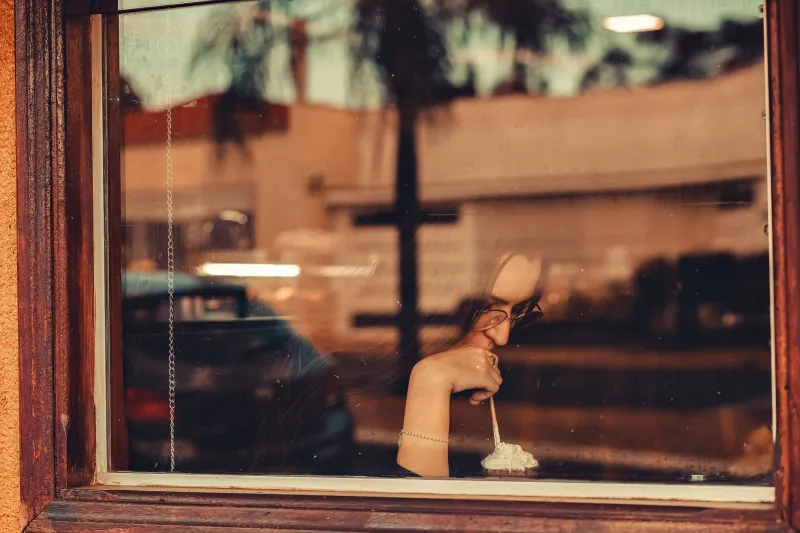
Somewhere along the way, a quiet little shift happened that I didn't even notice at first. I'd be sitting at a diner with a friend, laughing at something ridiculous, and before the laugh even finished, a tiny voice in my head would whisper: this would make a great story for the feed. Not for my journal. Not even for a conversation later. For the feed.
That's when I knew something had gotten a little sideways.
If you're an entertainer — or honestly, anyone with any kind of public presence — you probably know exactly what I'm talking about. The lines between your real life and your performed life get blurry so gradually that you don't realize you've crossed them until you're standing in the middle of a genuinely emotional moment wondering what caption would work best.
It's not a moral failing. It's a symptom of living in an era where visibility and value feel like the same thing. But they're not. And confusing them costs you more than you'd expect.
The Persona Is Real, But It Isn't All of You
Here's something I had to sit with for a while: the version of me that goes on stage, or shows up in interviews, or posts on social media — that's not fake. She's real. She's just curated. She's the parts of me that I've chosen to share, shaped and polished for a particular context.
The problem comes when you start believing that curated version is the only legitimate version. That the messy, tired, confused, sometimes-boring everyday you is somehow less valid because it doesn't translate well to a highlight reel.
Your off-stage life doesn't need to be content. It doesn't need to be a story arc. It doesn't need a narrative through-line or a lesson at the end. Sometimes you're just a person eating leftover pasta at 11pm watching a reality show about competitive cake decorating, and that's completely fine and also not anyone else's business.
The entertainer's trap is thinking that the private self only counts if it eventually feeds the public one.
What Actually Happens When You Never Unplug
I've watched this play out in myself and in people I deeply respect. When you never fully step out of performance mode, a few things start to happen — none of them good.
First, you get tired in a way that sleep doesn't fix. It's a specific kind of exhaustion that comes from never fully putting down the role. Actors talk about this. Musicians talk about this. It's the feeling of being constantly "on" even when you're technically off the clock.
Second, your relationships start to feel weirdly transactional — even when they aren't. When you're always partly performing, you start to experience other people as either audience members or potential content, rather than just humans you care about. That's a lonely way to live, even if your follower count is doing great.
Third — and this one took me the longest to recognize — you start to lose access to the emotional raw material that makes your performances meaningful in the first place. The whole reason audiences connect with a story is because it feels true. If you've been performing your life for so long that you've lost touch with what's actually happening inside you, that truth becomes harder and harder to access when you need it most.
Practical Ways to Actually Protect Your Off-Stage Self
I want to be real here: I don't have a perfect system. What I have is a collection of small practices that, taken together, help me keep something genuinely mine.
Designate spaces that aren't for documentation. For me, this started with one rule: no phone at the dinner table when I'm with people I love. Not for photos, not for checking notifications, not for anything. That hour or two is just life, happening without a record.
Notice the impulse before you act on it. When that little voice says this would make great content, I've learned to pause and ask: do I actually want to share this, or am I just reflexively thinking in terms of the feed? Sometimes the answer is yes, share it. Often, the answer is: this moment is for me.
Keep a private journal alongside any public writing. The public stuff is shaped and intentional. The journal is where I'm allowed to be completely unresolved. No conclusions required. No lessons learned. Just the actual texture of what's going on. It keeps me honest about the difference between what I've processed and what I'm still in the middle of.
Let some experiences be ordinary on purpose. Not everything needs to be significant. Some weekends can just be errands and a long walk and a mediocre movie. Resisting the urge to extract meaning from every moment is its own kind of discipline.
The Permission You Might Not Know You Have
Here's what I really want to say, especially to anyone earlier in their career who's still figuring this out: you are allowed to have a life that doesn't serve your brand.
You are allowed to have friendships that never get mentioned publicly. Opinions you keep to yourself. Experiences that belong only to the people who were there. Feelings you work through privately before — or instead of — sharing them with an audience.
Your audience wants to connect with something real. But real doesn't mean unfiltered access to everything. Real means that what you do share actually comes from somewhere genuine. And you can only maintain that if you're protecting the source.
The performance is the thing you offer the world. But the life underneath it — the actual, messy, private, unglamorous life — that's what keeps the performance alive.
Don't hand it all over. Keep some of it. You're going to need it.