Fame Is Easy. Being Seen for Real Is the Whole Point.
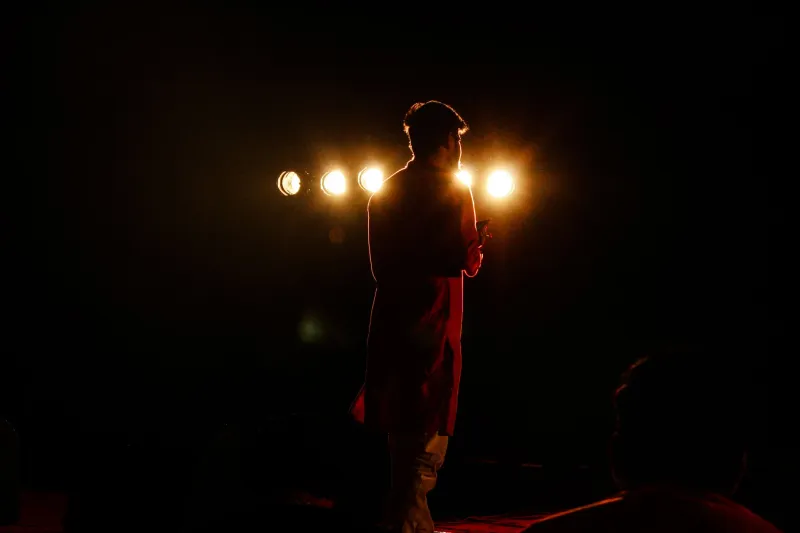
There was a night a few years back when I walked offstage to what I can only describe as a genuinely good response. People were clapping hard. A few were on their feet. Someone near the back was doing that two-finger whistle thing that always sounds impossibly cool. By every measurable standard, it was a win.
And I remember standing in the wings, still catching my breath, feeling weirdly... flat.
Not ungrateful. Not sad, exactly. Just flat. Like I'd ordered something off a menu, eaten the whole plate, and still wasn't sure what I'd actually tasted.
It took me a long time to figure out what was missing that night. And honestly, working through that question changed pretty much everything about how I approach what I do.
The Difference Nobody Talks About
Here's the thing about being known: it's surprisingly easy to achieve and surprisingly unsatisfying once you have it. Recognition — the kind where people know your face, remember your name, maybe even follow you somewhere online — that's accessible. It's a function of visibility and repetition. Show up enough times in enough places and people will start to recognize you. That's just how human brains work.
Being understood is a completely different animal.
Being understood means someone watched what you did and walked away with the thing you were actually trying to give them. It means the story landed. The character's grief felt real to them because they've carried something similar. The humor hit because it was true, not just because it was timed well. It means there was a genuine exchange — you put something out, they received it, and something passed between you that mattered to both of you.
That's rarer. And it's so much harder to manufacture.
When I Started Noticing the Gap
I've had moments of recognition that felt completely empty and moments of connection with a single person in a half-full room that I still think about years later.
I remember doing a smaller show in a mid-sized city — not a glamour gig by any stretch — and afterward, a woman came up to me and said something so specific about one moment in the performance that I actually had to ask her to repeat it. She had caught something I'd buried deep in the work, something I wasn't even sure was visible. She named it. Described exactly what it meant to her and why.
I almost cried in the lobby of a community arts center in front of a stranger.
That interaction did more for me than a sold-out room of people who showed up because my name was on the poster. Because she didn't just see the show — she saw into it. And in doing that, she saw a little bit of me.
That's the thing I keep chasing. Not the poster. Not the poster's reach.
What It Actually Takes to Be Understood
Here's the uncomfortable part: if you want people to understand you, you have to be understandable. Which sounds obvious until you realize how much of what performers do — what I've done, plenty of times — is designed specifically to keep people at a comfortable distance.
Polished is safe. Impressive is safe. A flawless performance where everything goes exactly right and nobody ever glimpses the seams? That's safe.
But safe doesn't connect. Safe gets applause and then people go home and forget about it by Tuesday.
The moments that actually land — for me, as a performer, and honestly as an audience member too — are the ones where something real slips through. Where you can feel the person on that stage making a choice that cost them something. Where the story being told has weight because it came from somewhere true.
That requires a kind of vulnerability that genuinely does not get easier with experience. I want to be honest about that. Every time I decide to put something real into the work, there's a part of me that would very much prefer to just do the impressive version and go home.
But I know what the impressive version feels like from the inside. I've stood in those wings.
How This Shapes the Stories I Choose
I've gotten more selective over time about what I take on and what I put into it. Not precious about it — I don't think every single thing needs to be a deep personal excavation. But I've started asking myself a different question when I'm deciding whether to commit to something.
I used to ask: Will this be good? Or honestly, sometimes just: Will people like it?
Now I ask: Does this have something true in it? And am I willing to find it and actually show it?
If the answer is no — if it's purely a technical exercise or a visibility play — I've gotten better at either passing on it or being honest with myself that I'm doing it for different reasons. There's nothing wrong with doing work for practical reasons. But I try not to confuse that with the work that's meant to connect.
The work that's meant to connect requires me to show up differently. To stay curious about what the story is actually about, underneath the plot. To ask what the character knows that I don't yet, and then go find out.
The Audience That Gets It
One of the things I'm most grateful for — genuinely — is that the people who've stuck around here, who follow along with what I'm doing and why, are largely people who seem to get it. Who aren't here for the surface version.
I hear from people who'll reference something I said or did years ago that clearly meant something specific to them. Who'll connect what I'm working on now to something I put out a while back, drawing lines I didn't even know were visible. Who push back thoughtfully when something doesn't land for them, which is honestly just as valuable.
That's the audience I want. Not the biggest one. The realest one.
Because at the end of the day, when I'm standing in the wings catching my breath, what I want to feel isn't the size of the applause. It's whether something true passed between me and the people on the other side of it.
Everything else is just noise with good timing.