Nobody's First Choice, Everybody's Secret Weapon: What the Understudy Role Actually Builds
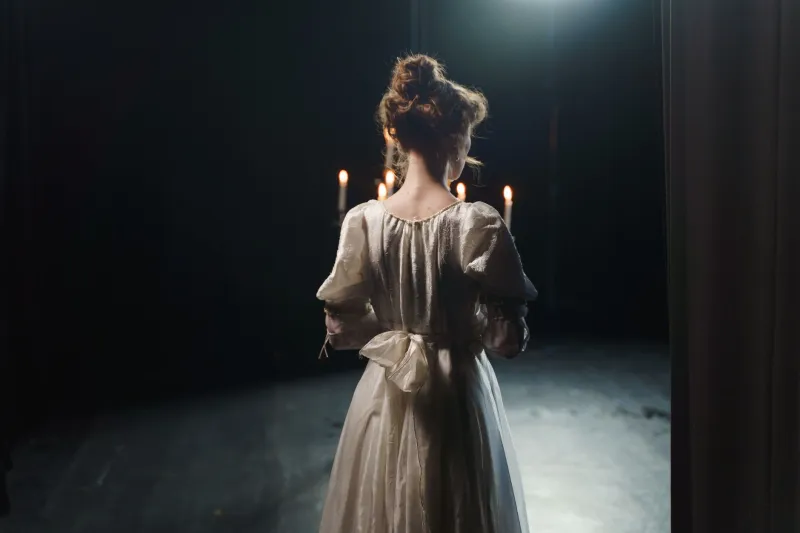
There's a particular kind of quiet that lives in the wings. Not peaceful, exactly. More like charged. You're dressed, you're ready, you know every word and every cue — and still, the person with your name on the door gets to walk out there first.
I spent a significant stretch of my early career in exactly that spot. Covering roles. Learning blocking for shows I might never perform. Memorizing songs I might never sing in front of a paying audience. And for a long time, I told myself a story about what that meant — that I wasn't quite enough, that the industry had sorted me into the "almost" pile, that the break I was waiting for was somehow being held just out of reach.
That story was wrong. Not just wrong — it was costing me the very lessons that were going to change everything.
What Nobody Tells You About Being Prepared and Invisible
Here's the thing about understudy life that doesn't make it into the inspirational posts: it's genuinely humbling in a way that the lead role almost never is. When you're the star, people build scaffolding around you. Schedules flex. Accommodations get made. The world, for the duration of that production, quietly reorganizes itself in your direction.
When you're the cover? You accommodate the star. You show up to every rehearsal already knowing your work won't be seen today. You give notes and get notes with full understanding that your performance exists mostly in contingency plans and production binders.
That is not a small thing to learn how to do with grace.
Because what it actually builds — underneath all the frustration and the waiting — is a kind of discipline that people who step into starring roles early almost never develop. You learn to do excellent work for its own sake. You learn to stay sharp without the feedback loop of applause. You learn that your preparation is your responsibility, not anyone else's, and that nobody is going to remind you to care.
That's not a soft skill. That's the foundation of a career.
The Moment Everything Shifted
I remember the first time I actually went on for someone. It was the kind of situation that sounds dramatic from the outside — last-minute call, thirty minutes to get ready, no time to spiral — and from the inside, it was almost eerily calm. Because I had been ready. Not just technically ready, but ready ready. The kind of ready that lives in your body because you've rehearsed it so many times that it stopped being rehearsal and started being instinct.
I walked out there and I didn't perform the role the way the person I was covering performed it. I performed it the way I'd been quietly building it for months — with my own instincts, my own choices, my own relationship to every beat. And something clicked that night that I hadn't expected: the audience didn't know they were supposed to have someone else. They just had me.
That performance didn't launch my career in some movie-moment way. But it shifted something internally that never quite shifted back. I stopped thinking of myself as a backup plan. I started thinking of myself as someone who had been doing the real work all along.
Humility Isn't the Same Thing as Smallness
There's a version of the understudy story that's all about waiting to be discovered, which is a passive framing and, honestly, a damaging one. But there's another version — the one I lived — where the understudy is actually doing something radical: learning how to lead without being handed the authority to do it.
You become a student of the production in a way the lead rarely has to be. You watch how scenes breathe. You notice what works and what's getting papered over. You develop opinions about character and story and staging that are independent of ego, because you have no ego investment in the current version — you're always imagining how your version would run.
That analytical distance is genuinely rare. Most people who step into a role early are too busy surviving it to study it. The understudy gets to study it from the outside, which means when they finally step in, they often bring a clarity that surprises everyone, including themselves.
Humility — real humility, not the performed kind — comes from genuinely knowing what you don't know and staying curious anyway. The understudy life hands you that education whether you want it or not.
What It Looks Like to Lead from That Place
Here's where I want to be careful, because I think there's a temptation to wrap this up with something like "and then I finally got my shot and proved everyone wrong" — and while there's truth in that arc, it's not actually the point.
The point is that the way I lead now, the way I approach creative work and collaboration and the moments when I'm in charge of a room, is directly shaped by those years of being second. I don't need to be the loudest person in the space. I don't need the credit to flow in my direction to feel secure about my contribution. I know how to hold a vision without holding it hostage.
Those are not qualities that come from being handed the starring role on day one. Those are qualities that come from years of doing the work without the reward, and deciding to keep doing it anyway.
Leaders who come up that way — who earned their place through consistency and quiet excellence rather than through being anointed — tend to build things differently. They tend to make room for other people, because they remember what it felt like to need room made for them. They tend to stay grounded when things get complicated, because they've practiced staying steady when nobody was watching.
The Invitation I Didn't Know I Was Accepting
If you're in the understudy seat right now — in your career, in your creative life, in any arena where you're showing up fully for a role that hasn't officially been handed to you yet — I want you to hear this clearly: the work you're doing right now is not filler. It is not a holding pattern. It is the actual formation of who you're going to be when the moment finally arrives.
Every performance you prepare and don't give. Every note you take and internalize. Every time you show up ready when readiness isn't even required — that's not wasted. That's the whole curriculum.
Being second choice is only a consolation prize if you decide it is. Otherwise, it's an invitation to become someone who doesn't need to be first — because they've already done the work to be undeniable.